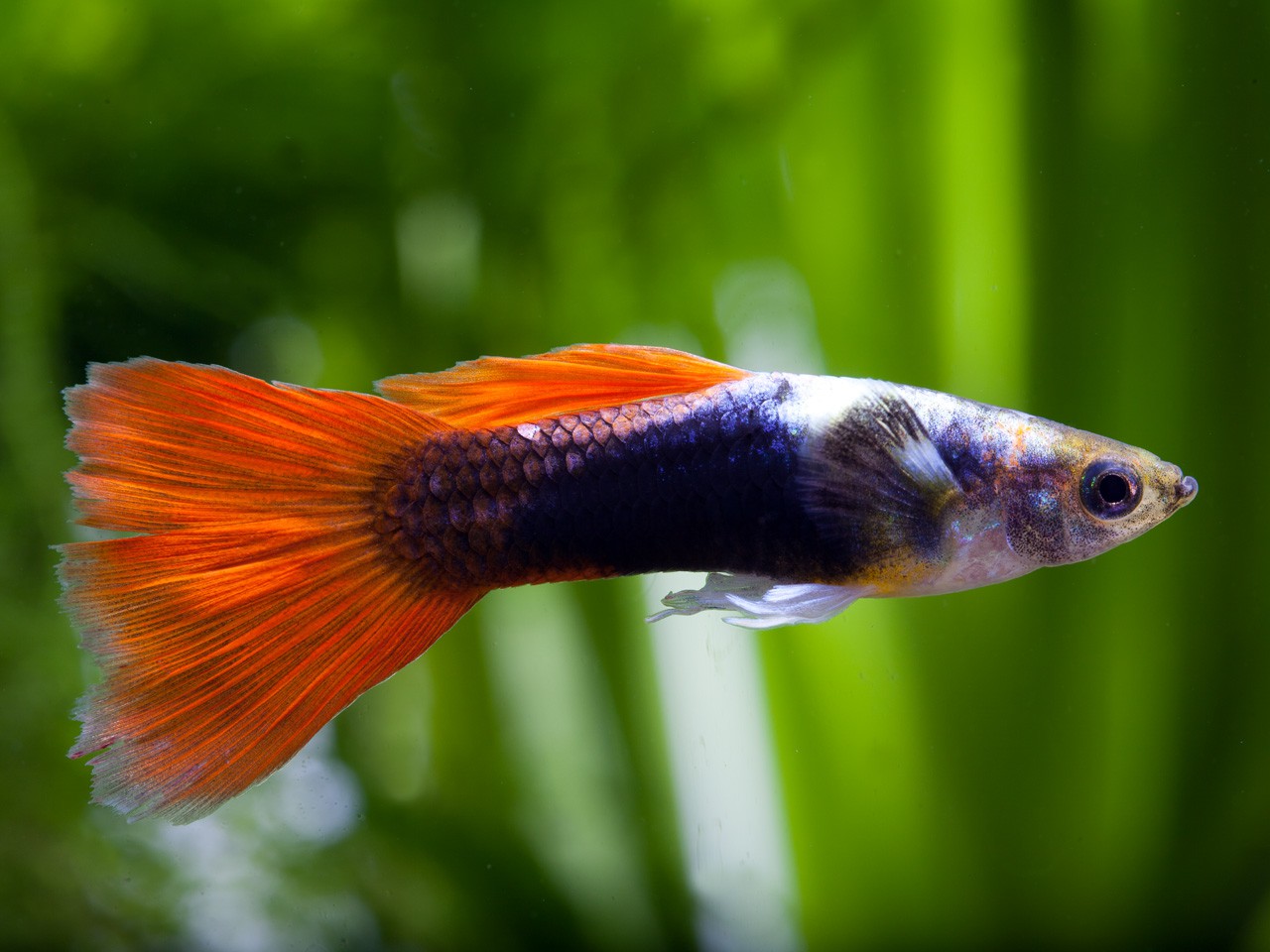
Complete Molly Fish Care Guide
Poecilia sphenops
Mollies are popular livebearing fish known for their variety of colors, patterns, and fin types. From the common black molly to the elegant sailfin, these adaptable fish have been aquarium favorites for decades.
Lifespan
3-5 years
Size
3-5 inches (depending on variety)
Tank Size
Minimum 20 gallons
Temperature
72-82°F (22-28°C)
pH
7.5-8.5
Diet
Omnivore
Mollies are popular livebearing fish known for their variety of colors, patterns, and fin types. From the common black molly to the elegant sailfin, these adaptable fish have been aquarium favorites for decades.
Native to freshwater and brackish environments in the Americas, mollies are hardy fish suitable for beginners. They're active, peaceful, and breed readily in home aquariums. This guide covers everything needed for successful molly keeping.
Molly Varieties
Mollies come in numerous varieties created through selective breeding.
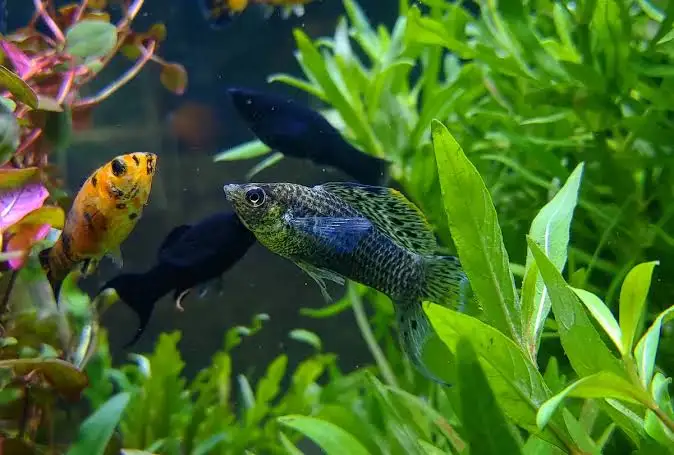
Common Types - Black Molly: Solid black, classic variety - Dalmatian Molly: White with black spots - Gold/Orange Molly: Bright golden color - Silver Molly: Metallic silver sheen - Balloon Molly: Round body shape (controversial)
Fin Types - Common/Short-fin: Standard finnage - Sailfin Molly: Large, impressive dorsal fin - Lyretail: Extended tail fin rays
Sailfin Mollies - Larger than common mollies (up to 5-6 inches) - Need bigger tanks (30+ gallons) - Impressive dorsal fin display - Males larger than females
Note on Balloon Mollies Balloon mollies have compressed spines causing their round shape. Some consider this unethical breeding. They may have shorter lifespans and health issues.
Water Requirements
Mollies have specific water preferences that differ from many community fish.
Water Parameters - Temperature: 72-82°F - pH: 7.5-8.5 (prefer alkaline) - Hardness: 15-30 dGH (prefer hard water) - Ammonia/Nitrite: 0 ppm
Why Hard, Alkaline Water? - Mollies evolved in hard water environments - They struggle in soft, acidic water - Can even tolerate brackish conditions - This sets them apart from many tropicals
Brackish Tolerance - Mollies can thrive in brackish water - 1-2 tablespoons salt per gallon - Not required but beneficial for some - Research before mixing with other species
Freshwater is Fine Despite brackish tolerance, mollies do well in fresh hard water. Don't add salt to community tanks without research.
Tank Setup
Setting up a proper molly tank ensures healthy, active fish.
Tank Size - 20 gallons minimum - 30+ gallons for sailfin varieties - More space = healthier fish
Filtration - Moderate to strong filtration - Mollies appreciate clean water - Some water movement is good
Plants - Live plants recommended - Java fern, hornwort, Vallisneria - Provide hiding spots for fry - Mollies may nibble on soft plants
Substrate - Sand or gravel both work - Light colors show off dark mollies - Easy to clean is important
Decorations - Provide hiding spots - Open swimming areas - Avoid sharp objects
Breeding Mollies
Mollies are livebearers that breed readily in home aquariums.
Sexing Mollies - Males: Smaller, pointed anal fin (gonopodium) - Females: Larger, fan-shaped anal fin, gravid spot - Males often more colorful - Sailfin males have larger dorsal fins
Breeding - Mollies breed readily without intervention - Keep ratio of 2-3 females per male - Males can harass females constantly - Gestation: 4-6 weeks
Giving Birth - Females give birth to 20-100 live fry - May eat their own fry - Provide dense plants or breeding box - Remove pregnant female before birth
Raising Fry - Feed crushed flakes or baby brine shrimp - Separate from adults if possible - Fast-growing with good food - Sex becomes apparent at 2-3 months
Controlling Population - Mollies breed prolifically - Keep only one sex to prevent breeding - Local fish stores may take juveniles - Some fry will be eaten naturally
Health and Disease
Mollies are generally hardy but prone to certain conditions.
Molly Disease (Shimmies) - Symptoms: Rocking motion, unable to swim properly - Cause: Poor water quality, wrong parameters - Treatment: Improve water conditions, add salt - Often indicates water is too soft/acidic
Ich - Common in new or stressed fish - White spots on body - Raise temperature, add salt, medicate
Fin Rot - Ragged, deteriorating fins - Caused by poor water quality - Clean water and medication
Columnaris - White patches, rapid decline - Bacterial infection - Requires antibiotic treatment
Prevention - Maintain proper water parameters - Hard, alkaline water is key - Regular water changes - Quarantine new fish - Avoid sudden parameter changes
Common Mistakes to Avoid
- 1Keeping in soft, acidic water
- 2Tank too small for group
- 3Not accounting for breeding
- 4Poor male-to-female ratio
- 5Mixing with incompatible species
- 6Inadequate filtration
- 7Ignoring the shimmies behavior
- 8Overfeeding and poor water quality
Frequently Asked Questions
Do mollies need salt?
While mollies can thrive in brackish water, they don't require salt in freshwater aquariums. What they do need is hard, alkaline water (high pH and hardness).
How many mollies should I keep?
Keep at least 3-4 mollies in a 20-gallon tank. If keeping males and females, maintain a 2-3 female to 1 male ratio to prevent harassment.
Why are my mollies shimmying?
Shimmying (rocking motion) usually indicates poor water conditions, especially soft or acidic water. Test and adjust water parameters, increase hardness and pH if needed.
Can mollies live with guppies?
Yes, mollies and guppies make good tank mates as they have similar care requirements and temperaments. Be aware they may interbreed.
Recommended Products
Equipment we recommend for Molly Fish care
API Freshwater Master Kit
Essential water testing
Seachem Prime
Best water conditioner
Python Water Changer
Easy water changes
As an Amazon Associate we earn from qualifying purchases