
Nurse shark bites are uncommon and rarely life-threatening, but they can cause serious wounds because the shark clamps down and may not let go. Most happen when someone touches, steps on, or feeds one. If you are bitten, stop the bleeding first, call 911 for anything more than a small wound, and get every bite checked by a doctor the same day.
What Are Nurse Sharks?
Nurse sharks (Ginglymostoma cirratum) are bottom-dwelling sharks of warm Atlantic coastal waters, and they are locally common in the West Indies, south Florida, and the Florida Keys. They rest on sandy bottoms or in caves and crevices during the day and forage at night.
Adults average about 7.5 to 8 feet long and more than 200 pounds. The Florida Museum gives a maximum recorded length of 308 cm, or about 10 feet, and sources disagree about how much larger they can grow.
They eat fish, stingrays, mollusks, crustaceans, and other bottom animals. A small mouth and large throat let them suck prey out of tight spaces, and strong jaws filled with thousands of tiny, serrated teeth can crush shells, including heavy conchs.
The species is under more pressure than its calm reputation suggests. A 2019 IUCN Red List assessment lists the Atlantic nurse shark as Vulnerable, though many older profiles still show Data Deficient. The Florida Museum reports that numbers in Florida's coastal waters have declined over recent decades. The sharks are also taken as bycatch and sold in some regions for fins, meat, and skin.
How Dangerous Are Nurse Shark Bites?

Nurse sharks are usually calm and tend to swim away when approached. They are not harmless, though. The Florida Museum warns that a disturbed nurse shark can bite hard enough to cause serious injury, and some unprovoked bites have been reported.
What the Numbers Show
The International Shark Attack File lists 9 confirmed unprovoked nurse shark bites and no deaths in its species table, which covers records from 1580 and was last updated in January 2022. Nurse sharks are easy to identify, so that count is more likely to be accurate than the counts for many look-alike species. The same table credits far more bites, and many deaths, to larger sharks such as the great white and tiger shark.
Provoked bites are more common. In 2016, the file's then-director George Burgess told Newsweek that there had been 44 recorded provoked bites, none fatal. That figure is several years old, and bites that were never reported would not appear in any count.
Why the Bite Can Be Serious
No reliable measurement of nurse shark bite force turned up for this article, but the results of a bite are well described. The shark feeds by suction, so a bite can pull tissue into the mouth as the teeth grip it. Burgess compared the effect to a vacuum that can leave a hollow in the flesh.
The other problem is the grip. Burgess said nurse sharks often do not let go after latching on. In a 2016 case in Boca Raton, Florida, a woman reached the hospital with a small nurse shark still attached to her arm. Someone had reportedly killed the shark on the beach, and it still did not release. She lost little blood and was released that day.
Why Do Nurse Sharks Bite?
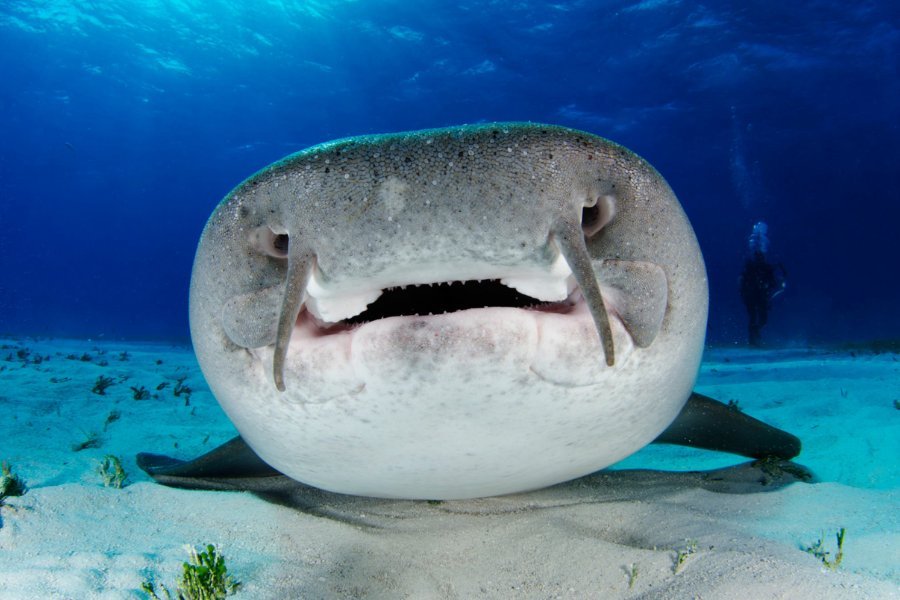
Most bites are defensive and follow human contact.
- Touching or grabbing: Grabbing a resting shark, pulling its tail, or trying to ride it invites a defensive bite. Witnesses in the Boca Raton case said people had been handling the shark, though the woman's friends denied antagonizing it.
- Stepping on one: A nurse shark resting on the bottom is easy to miss in shallow water. National Geographic notes that they will bite when stepped on or bothered by divers who assume they are docile.
- Feeding: Food in the water can bring sharks close and make a mistaken bite more likely. In 2018, a teenager swimming with nurse sharks at Staniel Cay in the Bahamas was bitten on the arm and pulled underwater before the shark let go. She later needed hospital care for infected wounds.
- Fishing and handling: The National Park Service says a clamping bite typically follows a diver or fisher provoking the shark.
What to Do Right After a Nurse Shark Bite
Bleeding comes first. These steps follow guidance from MedlinePlus and a Jackson Health shark bite guide that draws on the STOP THE BLEED program.
- Get out of the water and get help. Alert a lifeguard or the people around you. Call 911 unless the wound is clearly small.
- Press firmly on the wound. Use a clean cloth or gauze and both hands. Keep the pressure on without lifting to check. Pack deep wounds with clean cloth or gauze and keep pressing.
- Use a tourniquet only for life-threatening limb bleeding. If firm pressure does not control it, place the tourniquet 2 to 3 inches above the wound and not on a joint. Tighten until the bleeding stops, note the time, and leave it on for medical staff to remove.
- Keep the person lying down and warm. Watch for shock, including pale or cold skin, dizziness, confusion, or fainting.
- Leave stuck objects in place. If a tooth fragment or other object is embedded, do not pull it out. Pad around it.
- Clean small wounds gently. Once bleeding is under control, rinse with clean running water and cover with a sterile dressing. Do not tape or glue the wound shut. A clinician should decide whether to close it.
- See a doctor the same day, even for a small bite. Tell them it was a shark bite in seawater so they can consider antibiotics and a tetanus shot.
If the Shark Is Still Attached
Do not yank the arm or leg away, and do not try to pry the jaws apart by hand. Pulling is likely to tear more tissue. Killing the shark did not free the woman in the Boca Raton case.
Call 911 and keep the person calm and still. Time quoted the National Park Service as saying it may take some minutes for a nurse shark returned quietly to the water to relax and release. If you are in shallow water and it is safe, keeping the shark submerged and supported is the approach that guidance points to. Otherwise, paramedics can transport the person with the shark attached, as they did in Boca Raton.
When to Call 911
- Bleeding that does not slow with firm pressure, or blood that spurts
- A deep wound, or one that shows muscle, fat, or bone
- A bite on the face, neck, chest, abdomen, or groin
- Dizziness, fainting, confusion, or pale, cold skin
- Numbness or loss of movement below the bite
- A shark that will not let go
How Are Nurse Shark Bite Wounds Treated?
Doctors usually start by assessing the depth of the wound and checking for damage to nerves, tendons, and blood vessels. Emergency medicine references recommend X-rays of the injured area to look for fractures and retained teeth, along with wound cultures.
- Cleaning: The wound is washed out thoroughly. Small punctures and abrasions may need little beyond irrigation and a topical antibiotic.
- Debridement: Damaged or dead tissue is removed.
- Repair: Bigger wounds often need surgery. Whether and when to close a small wound is a judgment call, and some are left open at first because of infection risk.
- Antibiotics: Emergency references recommend preventive antibiotics for all shark bites, even minor ones, with coverage for Vibrio, staph, and strep. The doctor chooses the drug based on the wound and the patient's allergies.
- Tetanus protection: The CDC says people with a recent wound are at higher risk of tetanus, and that a provider may give extra protection to someone who is not up to date on boosters.
After treatment, follow the wound care instructions and keep follow-up visits, since wounds can become infected days later.
What Are the Risks of Infection?
Infection is one of the main reasons even a small bite needs a doctor. Most research on shark mouth bacteria does not involve nurse sharks, so these findings come from other species. A study of blacktip sharks in Florida most often found Vibrio, Staphylococcus, and Pasteurella, along with some antibiotic-resistant bacteria. Emergency references also list Pseudomonas and Citrobacter.
Seawater adds its own risk. The CDC warns that Vibrio can infect open wounds exposed to salt or brackish water, and that these infections can become severe, sometimes needing surgery or amputation. Risk is higher for people with liver disease, diabetes, cancer, or HIV, and for people taking medicines that suppress the immune system.
Go to an emergency room right away if you notice:
- Spreading redness, swelling, warmth, or increasing pain
- Pus or other discharge, or skin that changes color
- Fever or chills
The CDC's advice for possible Vibrio wound infection is plain: do not wait. Keep the wound out of the ocean until it has fully healed.
Can You Prevent Nurse Shark Bites?
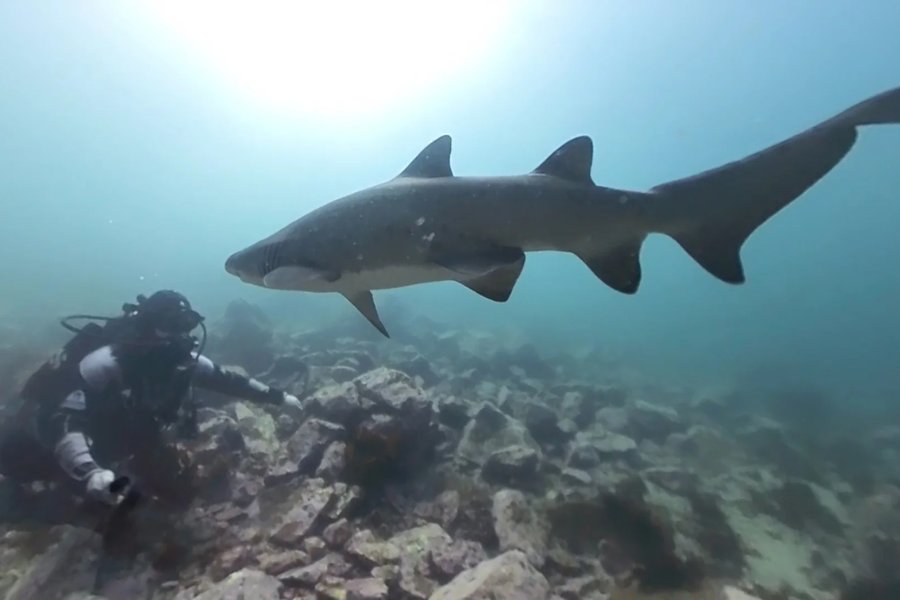
Almost all of the risk comes from contact, so prevention is simple.
- Never touch, chase, corner, or ride a nurse shark. A resting shark is not a tame one.
- Keep your distance. At least 6 feet (2 meters) is a sensible rule of thumb, though it is not a tested safety distance.
- Watch your feet in shallow reef and seagrass areas. Look before you stand so you do not step on a resting shark.
- Do not feed sharks or swim among feeding sharks. Be cautious about tours that encourage it.
- Handle hooked sharks with care, or cut the line. Keep your hands away from the mouth.
- Stay out of the water with open cuts. This protects you from Vibrio whether or not a shark is involved.
No gear can be counted on to prevent a bite. A wetsuit may reduce scrapes, but it will not stop those teeth and jaws.
What Are the Long-Term Effects?
Many small bites heal with a scar and nothing more. More serious wounds can damage muscles or nerves, which can mean lasting weakness, numbness, or reduced movement. Physical therapy can help people regain strength and motion.
Infection can extend recovery and may lead to repeat antibiotics or surgery, especially if tooth fragments remain in the wound.
Emotional effects are real as well. Some people who survive shark bites develop anxiety, a fear of the water, or post-traumatic stress. Talk to a doctor or mental health professional if those feelings do not fade.
Sources
- Nurse shark species profile (Florida Museum)
- Species implicated in shark attacks (International Shark Attack File, Florida Museum)
- Bleeding first aid (MedlinePlus, U.S. National Library of Medicine)
- Vibrio infection: causes, risks, and when to seek care (CDC)
- Bacteria in shark mouths and antibiotic guidance (PLOS ONE)