Back to Species
Critically Endangered
Hawksbill Sea Turtle
Eretmochelys imbricata
Also known as: Hawksbill
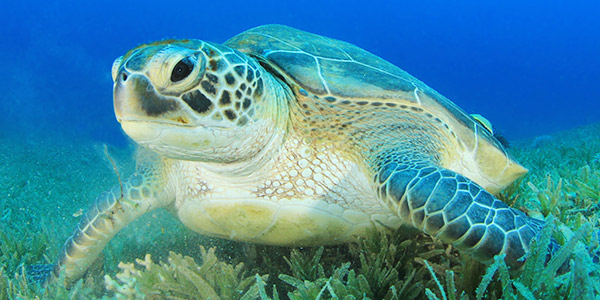
The Hawksbill Sea Turtle is critically endangered, primarily due to the trade in their beautiful shells used for "tortoiseshell" products. They play a crucial role in coral reef health by eating sponges that would otherwise outcompete corals.
Max Size
3.5 feet (1.1 m)
Lifespan
30-50 years
Depth
0-40 meters
Water Type
saltwater
Scientific Classification
- Class
- Reptilia
- Order
- Testudines
- Family
- Cheloniidae
- Species
- Eretmochelys imbricata
Habitat & Distribution
Habitat
Coral reefsRocky areasLagoons
Distribution
Tropical oceans worldwideCaribbeanIndo-Pacific
Behavior
Hawksbills spend their time around coral reefs, using their pointed beaks to extract sponges from crevices. They are solitary except during nesting season.
Reproduction
Females return to their birth beach every 2-3 years, nesting multiple times per season. They lay about 140 eggs per clutch. Hatchlings face many predators.
Conservation Status
Critically EndangeredPopulation trend: decreasing
Main Threats
- Shell trade
- Habitat loss
- Climate change
- Pollution
🎉 Fun Facts
- Their shells were used for jewelry and combs for centuries
- They are the only sea turtle that eats mainly sponges
- Hawksbill sponge diet makes their flesh toxic to humans
- They help coral reefs by controlling sponge populations
- A single hawksbill can eat 1,200 lbs of sponges per year