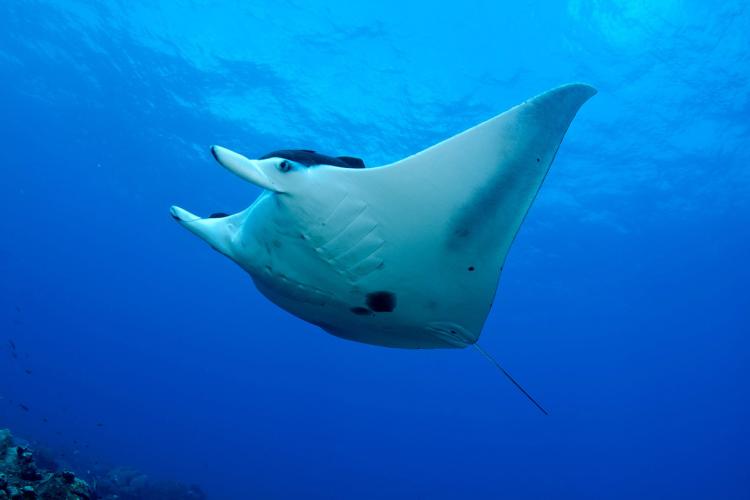
Giant Oceanic Manta Ray
Mobula birostris
Also known as: Manta Ray, Giant Manta, Oceanic Manta Ray
The Giant Oceanic Manta Ray is one of the largest fish in the world and among the most intelligent. Despite their enormous size, these gentle giants feed exclusively on tiny plankton and pose no threat to humans. They are known for their graceful swimming and curious nature.
Max Size
23 feet wingspan (7 m)
Lifespan
40-50 years
Depth
0-400 meters
Water Type
saltwater
Scientific Classification
- Class
- Chondrichthyes
- Order
- Myliobatiformes
- Family
- Mobulidae
- Species
- Mobula birostris
Habitat & Distribution
Habitat
Distribution
Behavior
Manta rays are filter feeders that swim with their mouths open to capture plankton. They are known to visit cleaning stations regularly and have been observed performing acrobatic leaps out of the water. They are curious and often approach divers.
Reproduction
Mantas give birth to a single pup after 12-13 months of gestation. Pups are born fully developed with a wingspan of about 4-5 feet. Females may only reproduce every 2-5 years, making population recovery slow.
Conservation Status
Main Threats
- Fishing
- Bycatch
- Demand for gill rakers
- Pollution
- Boat strikes
🎉 Fun Facts
- Manta rays have the largest brain-to-body ratio of any fish
- They can be identified by unique spot patterns on their bellies
- Mantas have been observed recognizing themselves in mirrors
- They visit "cleaning stations" where small fish remove parasites
- A group of manta rays is called a "squadron"