Back to Species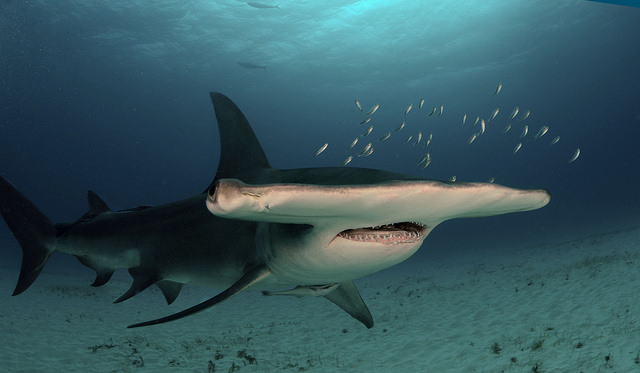
Critically Endangered
Great Hammerhead Shark
Sphyrna mokarran
Also known as: Hammerhead
The Great Hammerhead is the largest of the hammerhead sharks, instantly recognizable by its unique T-shaped head called a cephalofoil. This unusual shape gives them enhanced sensory capabilities and 360-degree vision.
Max Size
20 feet (6.1 m)
Lifespan
20-30 years
Depth
0-300 meters
Water Type
saltwater
Scientific Classification
- Class
- Chondrichthyes
- Order
- Carcharhiniformes
- Family
- Sphyrnidae
- Species
- Sphyrna mokarran
Habitat & Distribution
Habitat
Coastal watersContinental shelvesCoral reefs
Distribution
Tropical and warm temperate oceans worldwide
Behavior
Great hammerheads are solitary apex predators that hunt stingrays, fish, and other sharks. They use their head to pin prey against the bottom. They are generally shy around divers.
Reproduction
Hammerheads are viviparous, giving birth to 6-55 live pups. Females give birth in shallow nursery areas where pups are safer from predators.
Conservation Status
Critically EndangeredPopulation trend: decreasing
Main Threats
- Shark finning
- Bycatch
- Overfishing
🎉 Fun Facts
- Their wide head gives them 360-degree vertical vision
- They use their head to pin stingrays to the seafloor
- Hammerheads can detect electrical fields of prey
- They sometimes swim in schools of over 100 sharks
- Their hammer shape improves their ability to turn sharply