Back to Species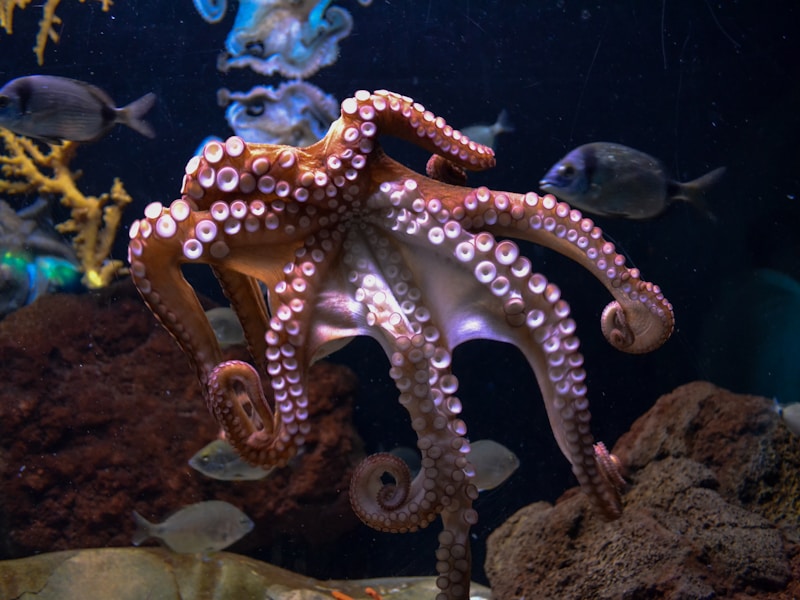
Least ConcernGood Alternative
Common Octopus
Octopus vulgaris
Also known as: Octopus
Octopuses are among the most intelligent invertebrates on Earth. They have three hearts, blue blood, and can change color and texture instantly. Each arm has its own "mini-brain" allowing independent movement.
Max Size
3 feet (0.9 m) arm span
Lifespan
1-2 years
Depth
0-200 meters
Water Type
saltwater
Scientific Classification
- Class
- Cephalopoda
- Order
- Octopoda
- Family
- Octopodidae
- Species
- Octopus vulgaris
Habitat & Distribution
Habitat
Coral reefsRocky areasSeagrass
Distribution
MediterraneanAtlanticWorldwide temperate/tropical
Behavior
Octopuses are solitary, intelligent hunters that use problem-solving and camouflage. They can open jars, solve mazes, and recognize individual humans. They are masters of escape.
Reproduction
Females guard eggs for weeks without eating and die shortly after they hatch. Males also die soon after mating. This short lifespan limits what they can learn.
Conservation Status
Least ConcernPopulation trend: stable
Main Threats
- Overfishing
- Habitat loss
🎉 Fun Facts
- They have three hearts and blue blood
- Octopuses can taste with their suckers
- They have been observed using tools
- Each arm has a "mini-brain"
- They can squeeze through any hole larger than their beak